


In an era where learning environments must evolve as fast as the minds they shape, community campus architecture stands at a powerful crossroads of tradition and modernity. Thoughtfully designed campuses today are not just places of education, but living ecosystems that celebrate cultural identity while embracing innovation, sustainability, and flexibility.
Modern vs. traditional campus design architecture
Campus architecture today faces the vital challenge of creating dynamic environments that are simultaneously innovative and deeply rooted in place. The traditional campus often evokes a sense of permanence, history, and academic gravitas through elements like quadrangles, local masonry, and formal symmetry. The modern outlook, conversely, champions flexibility, sustainability, and transparency, prioritizing advanced materials, open-plan interiors, and technology integration. Successful fusion of these two approaches combines global architectural innovation while grounding the design in local cultural, climatic, and historical contexts.
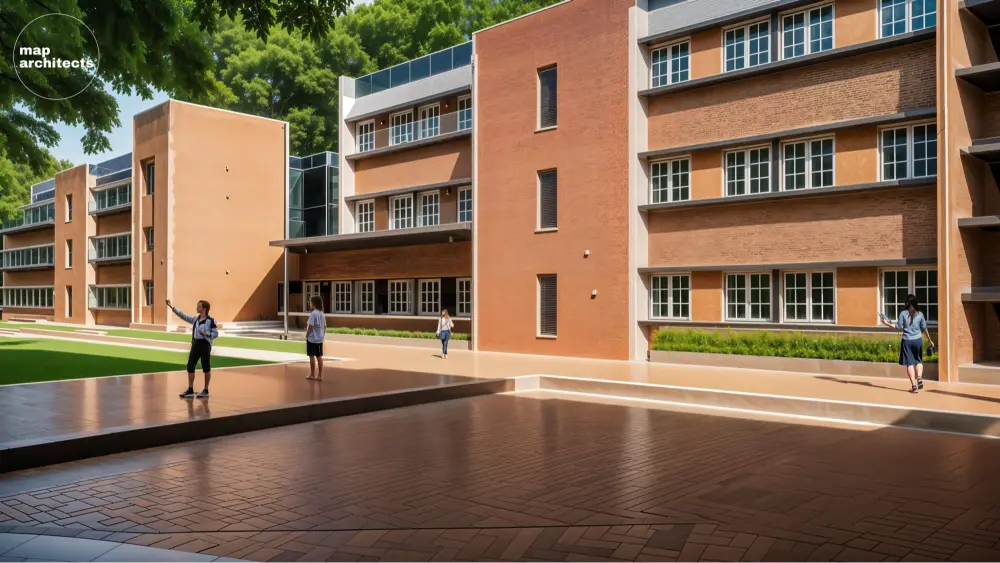
Use of natural elements for modern learning spaces
Map Architects believe in the spirit of modernism while ensconcing local culture and materials. Some of our campuses on the exteriors feature the axial alignment and sense of enclosure of a traditional courtyard to foster community, while the interior uses movable partitions, ample natural light, and integrated technology to facilitate modern, flexible learning and collaborative spaces. This balance ensures the campus retains a strong sense of place and institutional identity, feeling neither like an alien modern intrusion nor a historical pastiche.
These principles are also valid for public utility buildings. For instance, the design of Yashobhoomi Convention Centre (IICC), New Delhi winner of the International Architecture Award 2025 blends Indian cultural motifs with cutting-edge technology, including a massive digital LED façade, modular halls, and smart AV systems. IGBC Platinum sustainability, metro connectivity, EV charging, water recycling, and green boulevards define the campus.
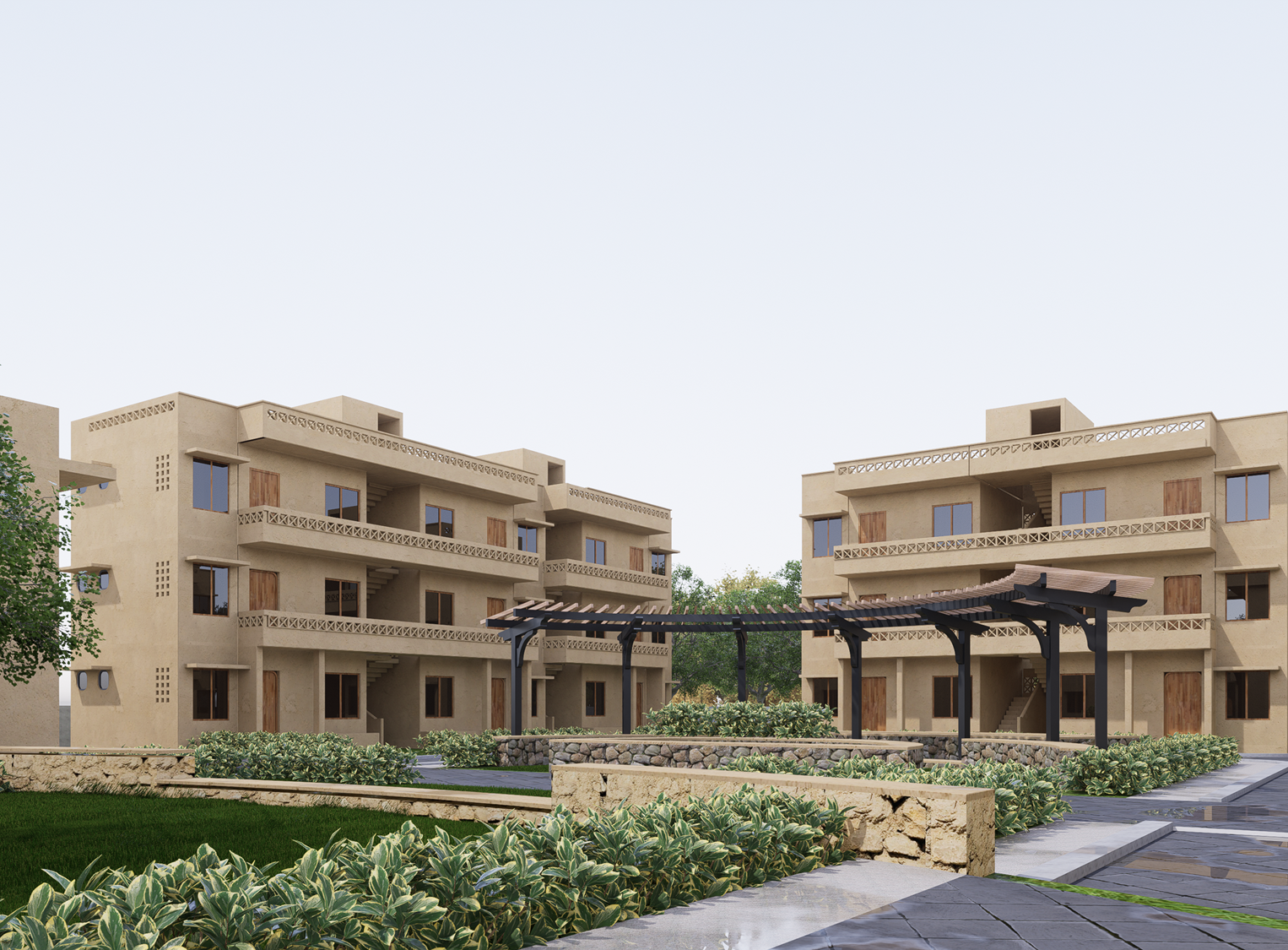
Tech – enabled sustainability at MAP Architects
At MAP Architects, we continuously build on our design innovation techniques to achieve creative excellence tailored to every context with evidence-based design across typologies. MAP Architects supports sustainable growth through Innovation in Design & Construction Techniques, and Sustainability, integrated with LEED, GRIHA and local compliance. More importantly, our collaborative process develops cutting-Edge solutions for design, coordination & delivery of project with stakeholder engagement from start to finish. Speed and scale is thus achieved, and our 100+ projects completed with faster delivery and measurable outcomes continue to guide and motivate us.
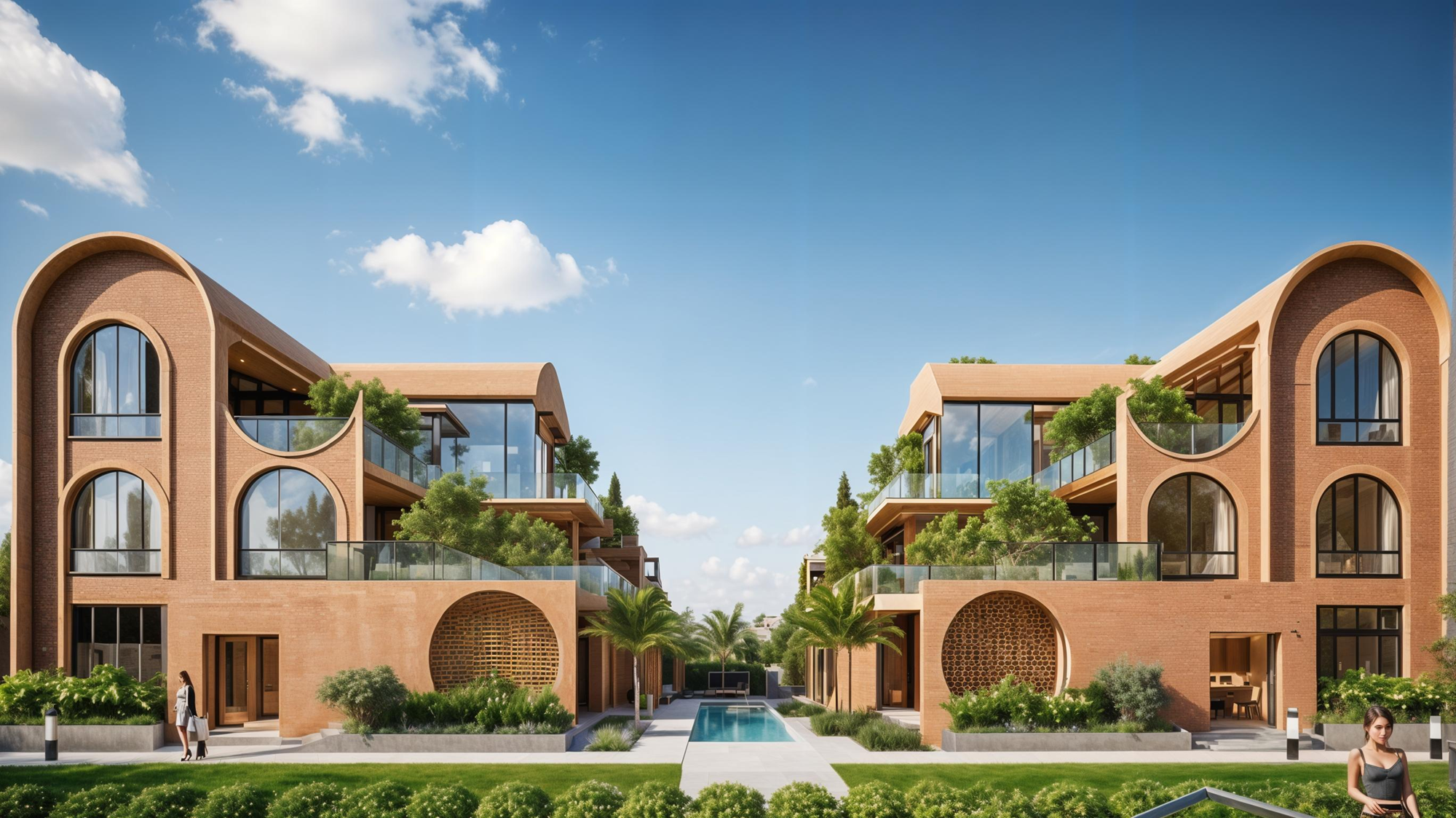
As we wrap up this exploration, here’s a quick overview to help you dive deeper into what MAP offers.
Discover MAP:
At MAP, we are committed to follow, promote and implement sustainability practices relevant to the local needs in principle with global standards. We are committed to do our business and satisfy our clients’ needs in the most sustainable manner. Our endeavor is to adapt the concept of Net Zero Development within our designs by minimizing total energy use, first through conservation and efficiency and then by using renewable energy to power the infrastructure. We design buildings to be constructed using sustainable materials, materials that can be used without any adverse effect on the environment, and which are produced locally, reducing the need to travel. The designs evaluate all environmental, social and economic negative impacts and benefits in decision-making processes towards more sustainable products throughout their life cycle.
Discover more:
Reference:
https://theaarchnews.com/awards-and-recogination/yashobhoomi-award-2025/
published October 08, 2025, viewed on December 15, 2025